

MARKET REPORT
ASC Global brings you the latest semiconductor industry findings with our Market Report, helping to provide valuable guidance for maneuvering market intervals. We excel in supply chain strategies that effectively address market volatility.
If you have any questions, please get in touch with your Account Manager or our support team at info@ascglobal.com | +1 954 718 2950.
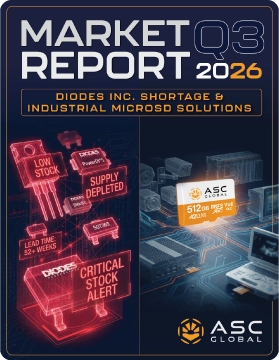
Previous Issues 2026
Previous issues 2025

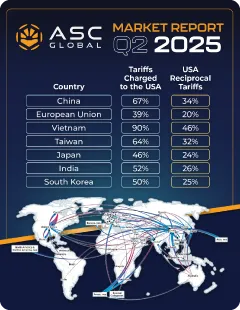


Previous issues 2024


News
How Targeted Component Discontinuations Q4
ProcureCon MRO 2026 ASC Global Solutions
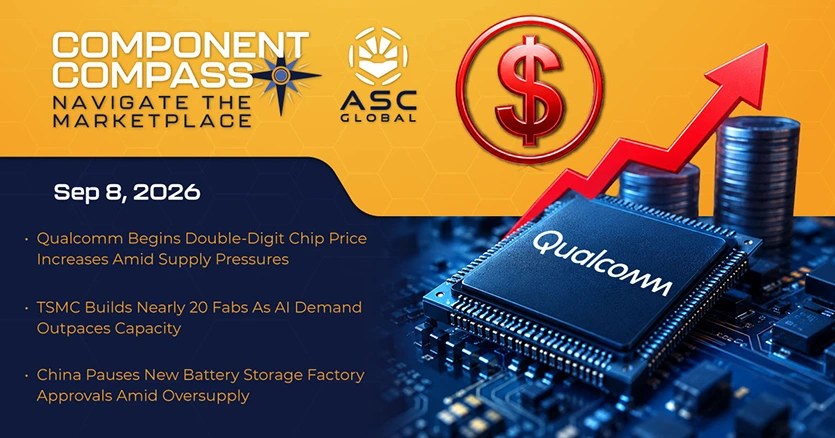
Qualcomm Chip Price Increases Supply Pressures
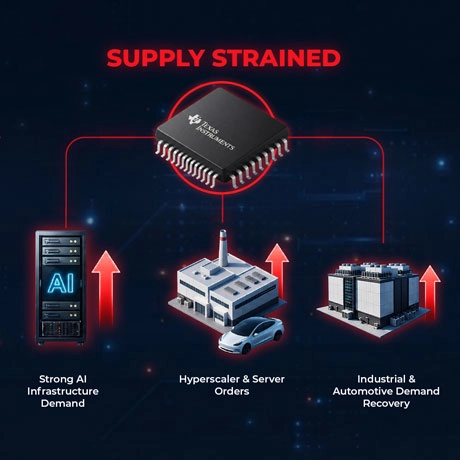
AI Component Shortages: MLCCs, Capacitors, and Texas Instruments Power ICs

Semiconductor Market Update Procurement Strategy 2026
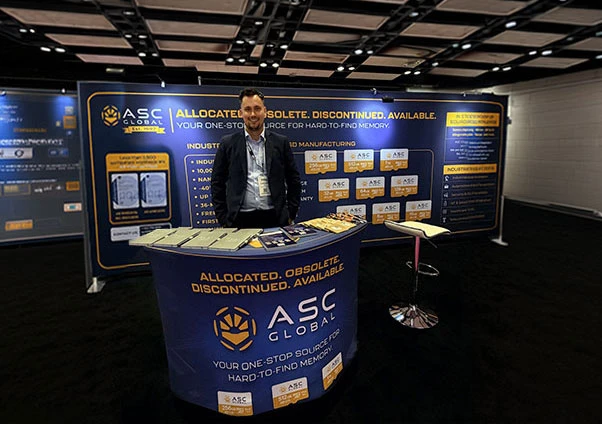
FMS 2026 Future of Memory and Storage
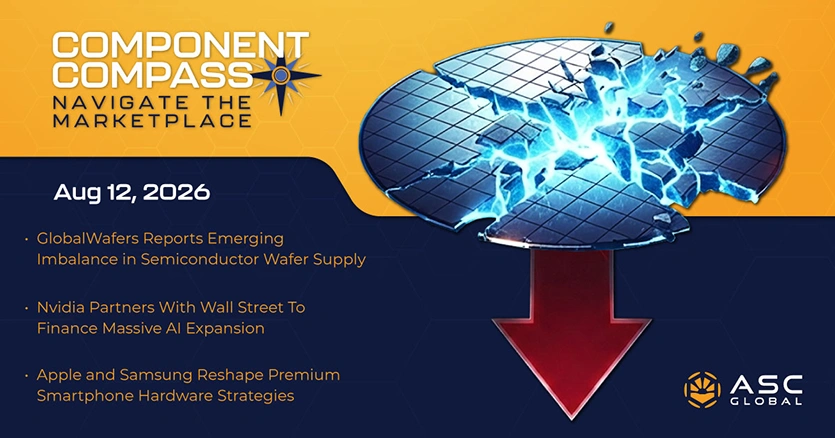
GlobalWafers Semiconductor Wafer Supply Imbalance

Industrial MicroSD Manufacturing Solutions
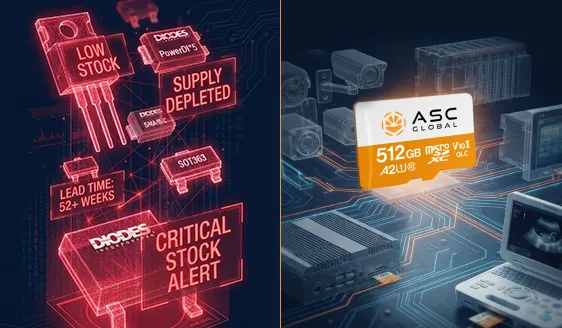
Market Report Q3 2026 – Industrial MicroSD Manufacturing & Diodes Inc. Shortage
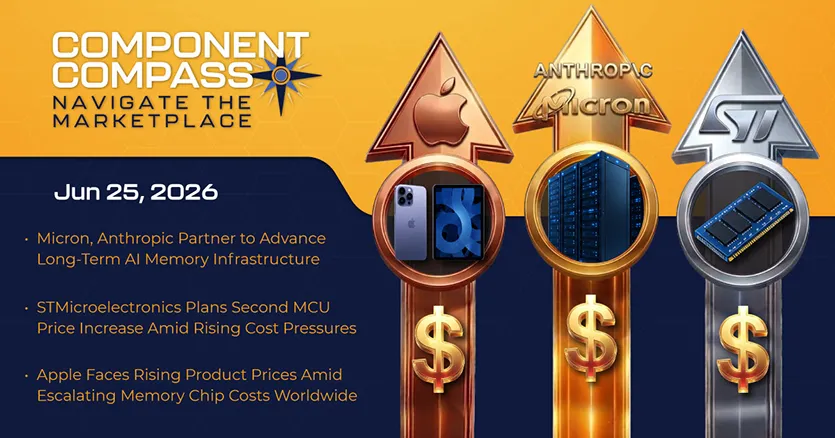
STMicroelectronics MCU Price Hikes, Apple Device Inflation, and Micron–Anthropic AI Memory Supply Shift

SK hynix and NVIDIA Forge AI Memory Alliance

United States Quantum Package Directs Billions
Market Report
What does the ASC Market Report cover, and what is it designed to help procurement teams do?
The ASC Market Report is a quarterly analysis of the electronic components and semiconductor market, written for procurement teams, supply chain managers, and engineers making component sourcing and planning decisions. Each edition covers the supply and demand dynamics, pricing trends, lead time forecasts, and inventory conditions shaping the market for the coming quarter.
The report draws on ASC's global sourcing network and market visibility across nine office locations to produce analysis that reflects current conditions across regional markets and distribution channels. Topics covered in recent editions include the AI-driven memory supercycle and its effects on DRAM and NAND Flash availability, supply chain realignment driven by tariff and geopolitical developments, industrial MicroSD manufacturing constraints, and the Diodes Inc. shortage affecting procurement teams across multiple end markets. The aim of each edition is not to summarize news that has already been widely reported, but to interpret market conditions in terms of what they mean for sourcing decisions in the quarter ahead.
Our procurement team needs forward-looking guidance on pricing and lead times to plan our sourcing strategy for the next quarter. Does the Market Report provide that level of detail?
Yes. Lead time direction and pricing trend analysis are core elements of every Market Report edition. The report covers which component categories are tightening in supply or experiencing price movement, what the underlying drivers are, and what the near-term outlook looks like for the following quarter. That analysis is intended to help procurement teams decide where to build inventory buffers, where to accelerate RFQs ahead of anticipated lead time increases, and where vendor diversification is most important.
The report covers specific component categories and manufacturers where conditions are changing, which is more directly useful for procurement planning than a general market summary. Rather than presenting data without interpretation, the Market Report connects market conditions to their practical sourcing implications, which is the information a procurement team needs to take action before conditions deteriorate.
We have been reading about an AI-driven memory supercycle affecting DRAM and Flash availability. Does the Market Report address this in detail?
The AI-driven memory supercycle is a central topic in recent Market Report editions. The structural dynamic is that AI infrastructure investment has redirected substantial DRAM and NAND Flash manufacturing capacity toward high-bandwidth memory and enterprise-grade storage devices. That supply shift reduces the allocation available for standard density commercial and industrial memory, which is reflected in lead time increases and price pressure across device families that had previously been stable and readily available.
For procurement teams, the practical implication is that memory components that were reliably available with short lead times now require earlier sourcing action and more active supply planning. The Market Report covers which memory device categories are most affected, how pricing is moving across density and interface segments, and what the near-term availability outlook looks like given current capacity allocation trends. It is the right starting point for a procurement team that needs to understand the scope of the issue before deciding how to adjust their sourcing approach for affected parts.
How do we access the Market Report, and is there a cost?
The Market Report is available at no cost through ASC's website. Each quarterly edition is accessible directly on the Market Report page, and the PDF version of the report can be received by email by registering with your name, company, and email address through the form on the page. Registration also delivers future editions directly to your inbox as they are published.
There is no requirement to be an existing ASC customer to access the Market Report. It is published as a free resource for procurement teams, engineers, and supply chain professionals who need current market intelligence to inform their sourcing and planning decisions.
We already use third-party market research tools for supply chain intelligence. What does the ASC Market Report provide that those tools do not?
General market research tools are typically designed for financial benchmarking or broad industry analysis, which means they reflect publicly reported data and tend to lag behind actual conditions in distribution and open-market channels. The ASC Market Report is built from visibility into live sourcing activity across ASC's global network of over 2,000 manufacturers and suppliers across nine office locations worldwide, giving it a distribution-level view of where supply is tightening, where pricing is moving in the open market, and which specific component categories are experiencing real availability constraints before those conditions are reflected in public reporting.
For procurement teams making decisions about specific component families and sourcing channels, that ground-level channel visibility is more applicable than general market benchmarking. The Market Report is also cross-referenced with the biweekly Component Compass, which tracks market developments between quarterly editions, so the analysis is grounded in current conditions rather than being limited to what was observable at the start of the reporting period.