
How Targeted Component Discontinuations
Threaten Q4 Production Schedules
Sep 20, 2026
As manufacturers prepare for Q4, a less visible supply-chain risk is emerging: targeted component discontinuations and increasingly selective sourcing.
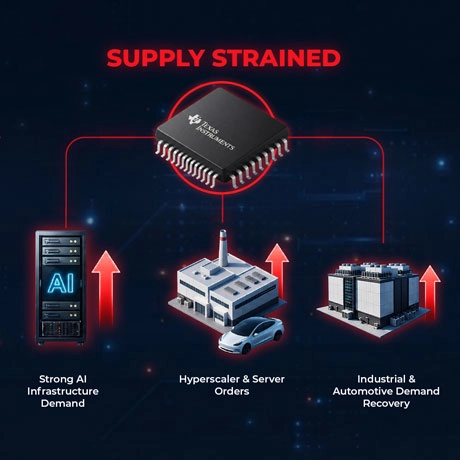
Major semiconductor and component manufacturers are aggressively streamlining their product portfolios to maximize profitability. As part of this shift, they are quietly reallocating wafer capacity away from industrial staples and toward higher-margin applications, particularly AI infrastructure and high-density memory such as HBM.
How Targeted Component Discontinuations
Threaten Q4 Production Schedules
Sep 22, 2026
As manufacturers prepare for Q4, a less visible supply-chain risk is emerging: targeted component discontinuations and increasingly selective sourcing.
Major semiconductor and component manufacturers are aggressively streamlining their product portfolios to maximize profitability. As part of this shift, they are quietly reallocating wafer capacity away from industrial staples and toward higher-margin applications, particularly AI infrastructure and high-density memory such as HBM.
The Cost of One Missing Component
The risk is not theoretical. Semiconductor manufacturers are already changing their product mix and manufacturing priorities as demand shifts toward higher-value AI and data-center products.
Samsung, for example, explicitly stated that its Memory Business was improving profitability by increasing sales of high-value-added products such as HBM, server DDR5, and enterprise SSDs. Samsung also said it planned to continue prioritizing high-value-added products for AI applications in 2026.
TSMC has also been shifting mature-node capacity toward higher-demand power-management applications. As AI infrastructure drives greater demand for PMICs and power devices, the company is reducing portions of its 8-inch capacity while prioritizing manufacturing resources toward products serving higher-value applications.
STMicroelectronics is increasingly emphasizing power semiconductor technologies designed for high-demand applications. Its portfolio includes GaN and SiC solutions targeting AI servers, industrial systems, and high-power infrastructure, reflecting a broader shift toward power devices capable of supporting higher power density and increasingly demanding electrical architectures.
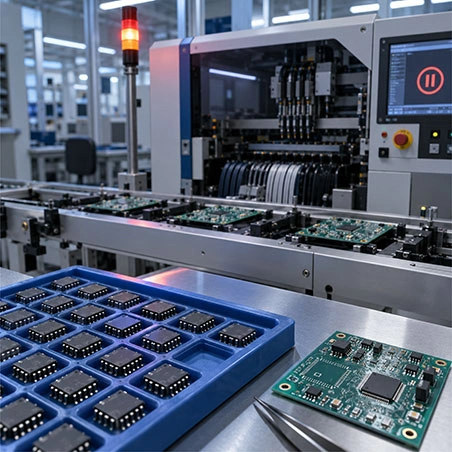
These changes do not mean manufacturers are simply abandoning conventional components. Rather, they demonstrate how limited manufacturing capacity and capital are increasingly being directed toward products with stronger demand and higher value, particularly across AI and data-center markets.
For industrial manufacturers, that distinction matters.
A mature component can remain essential to a factory while becoming a lower strategic priority for its manufacturer. If production is reduced, a product family is rationalized, or allocation is redirected, a previously routine BOM item can suddenly become difficult to source
Three Defenses Against Component Discontinuation Risk
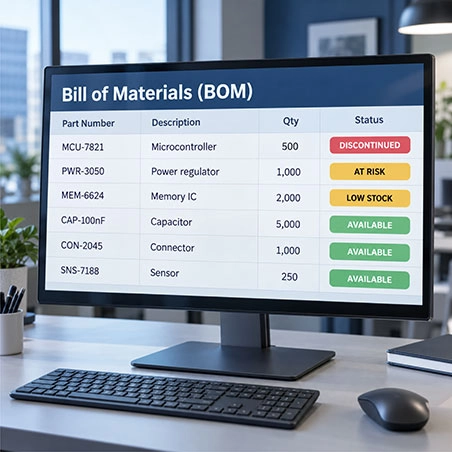
- Conduct BOM Health Audits
Regular BOM reviews can identify potential bottlenecks before they become emergencies. Manufacturers should prioritize:
- Single-source and EOL components
- Legacy or mature-node semiconductors
- Parts with unstable or extended lead times
- Hard-to-substitute components
- Parts dependent on a single manufacturer or factory
The goal is to identify which components could stop production if availability changes.
- Pre-Qualify Drop-In Alternatives
Finding a replacement after a component becomes unavailable is already too late.
Manufacturers should pre-qualify form-fit-function alternatives and verify electrical specifications, tolerance, temperature range, package, footprint, reliability, and certifications.
This ensures a replacement is ready before the original component becomes a constraint.

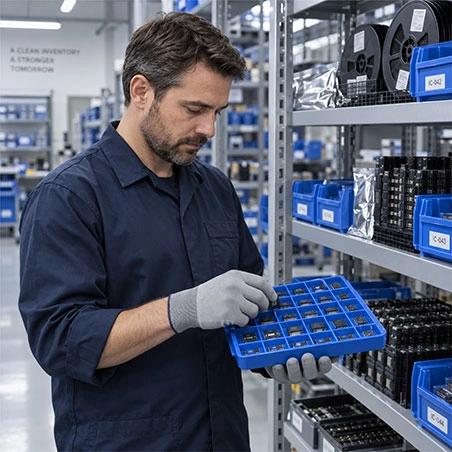
- Secure Verified Buffer Stock
Strategic inventory can protect critical components against sudden EOL announcements, allocation restrictions, and lead-time increases.
However, availability alone is not enough. Critical material should have appropriate traceability, authenticity, date-code, packaging, and quality verification.
How ASC Global Helps Protect Production
ASC Global helps manufacturers move from reactive procurement to proactive component risk management through global sourcing, BOM analysis, alternative-component identification, and verified inventory.
When components become difficult to source, ASC Global can help locate available inventory and alternative supply channels for mature, legacy, allocated, obsolete, or discontinued components.
ASC Global can also help identify vulnerable parts within a BOM, evaluate sourcing risks, and develop strategies around components that could affect production schedules.
For high-risk components, proactive inventory strategies can help customers avoid expensive emergency sourcing when market conditions tighten.
Looking Toward the Future
Are you ready to adapt your procurement strategy for the new market reality? Contact ASC Global today to learn how our sourcing specialists can help you secure your supply chain.