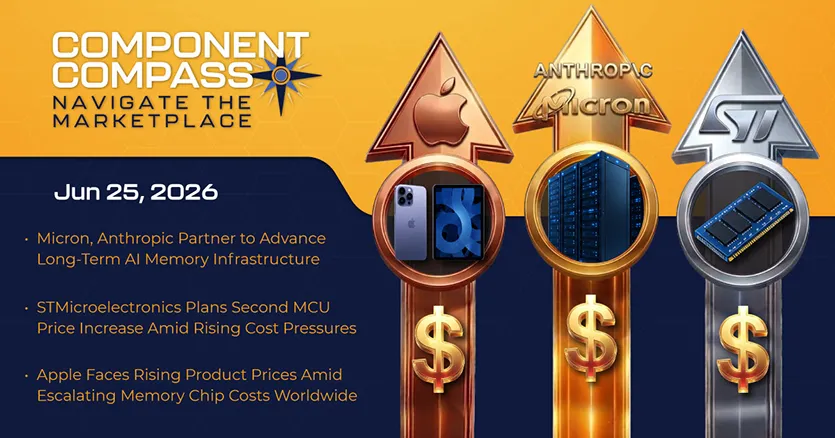
Experience Electronic Component Distribution in a New Light

Dec 9, 2022

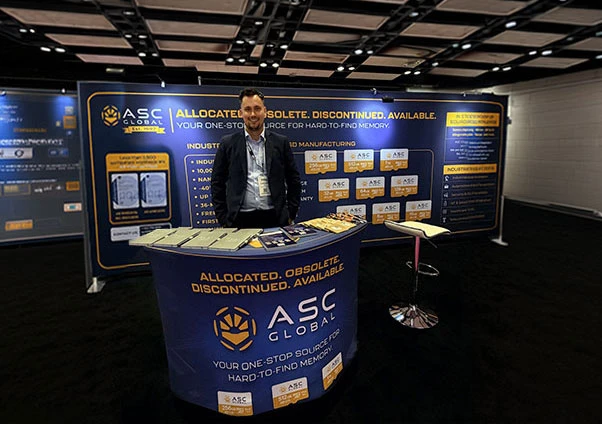
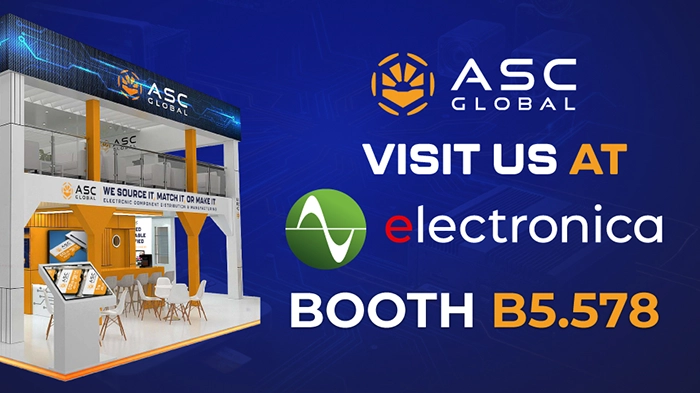
ASC American Sun Components was honored to attend electronica 2022 in Munich, Germany from November 15th to 18th. Electronica is the leading trade fair in the international electronics industry, and electronica 2022 brought together over 2,100 exhibitors and nearly 70,000 visitors. The fair booths spread out across 14 halls. This November, electronica saw the highest levels of attendance since before the COVID pandemic, with attendance only lagging behind 2018’s record high by 14%. International attendance from companies like ASC and visitors was up by 54% over previous exhibitions (electronica.de, 2022).

ASC hosted our own 350 square-meter booth, complete with a balcony, café seating, and a coffee and snack bar fully staffed with a barista and service team. Over the four days of the event, we invited visitors to enjoy free food and drinks and the opportunity to meet with members of the ASC team. At ASC, we believe the customer always comes first and strive to provide the best service and benefits in the international electronics industry. Electronica 2022 gave us the perfect opportunity to put that philosophy into practice for potential customers. Before leaving, everyone who stopped by got to spin our wheel of fortune for a prize. Free cocktails and vouchers for free shipping are just some examples of the items one was able to win. On the last day of electronica 2022, a professional violinist performed at the booth and enchanted the ears of every visitor in Hall B4 for several hours.

One of the main topics of conversation at electronica 2022 was the distribution challenges many manufacturers and suppliers are facing. Like many other industries, the international electronics industry has suffered from shipping delays, supply chain bottlenecks, and shortages of both raw materials and skilled workers.
Quality is Non Negotiable Text Sign

At our booth, visitors from around the world got the opportunity to see electronic component distribution in a new light. Without the proper components, electronics manufacturers cannot meet global demand for a wide variety of products. Their options are to scale down production and lose profit or replace their usual materials with inferior ones, potentially hurting their reputation and leading to future revenue loss.

ASC has over 5 million semiconductors, passives, and electromechanical components in stock from over a thousand name-brand suppliers. We can deliver anywhere in the world within 24 to 48 hours, helping to keep production lines moving. We also offer free quality testing, so our customers know that when we say “quality is non-negotiable,” we really mean it.

electronica.de (Nov. 18, 2022). electronica 2022 impressively confirms its status as the world’s leading trade fair for electronics. URL: https://electronica.de/en/newsroom/press-material/press-releases/detail/electronica-2022-impressively-confirms-its-status-as-the-worlds-leading-trade-fair-for-electronics.html
Frequently Asked Questions About
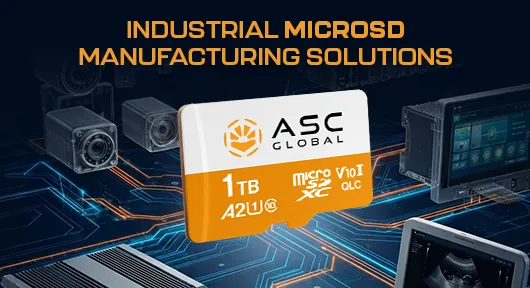
Industrial Microsd

How is ASC's industrial-grade MicroSD different from a standard consumer MicroSD card?

The difference starts at the NAND level. ASC's industrial MicroSD line uses true SLC (Single-Level Cell) architecture on capacities from 4GB to 32GB, which stores one bit per cell and supports millions of write cycles, compared to the multi-bit-per-cell TLC or QLC NAND used in consumer cards, which wear out far sooner under continuous write loads. Higher-capacity cards (64GB to 1TB) use TLC or QLC NAND graded for commercial or industrial duty depending on the application. Beyond the NAND, ASC's industrial cards carry a locked bill of materials, so the controller, firmware, and NAND source stay fixed for the life of the design rather than changing without notice, which is common with consumer-grade cards sold through retail channels. Every industrial card also ships with a 36-month manufacturer warranty and passes 100% pre-shipment quality inspection, neither of which apply to consumer retail products.

Our last microSD supplier changed the NAND or controller without notice and broke our qualification. How does ASC prevent that from happening again?

BOM changes are one of the most common ways embedded and industrial programs lose qualification on a memory component, because a consumer-grade supplier can substitute NAND die, controller firmware, or even the flash vendor between production runs without informing the customer. ASC's industrial MicroSD program locks the BOM at the point of qualification, so the NAND, controller, and firmware combination your engineering team tested and approved is the combination you receive on every reorder for the life of the program. Combined with 100% pre-shipment inspection and a 36-month warranty, this gives procurement and engineering teams a documented, stable part number to build a long-term hardware lifecycle around, rather than requalifying every time a reorder arrives.

We need microSD cards that survive automotive or outdoor temperature swings and years of continuous power cycling. What environmental and endurance specs does ASC's industrial MicroSD line meet?

ASC's industrial MicroSD cards are built for a -40°C to +85°C operating range and a stable 2.7V to 3.6V power profile, which covers the temperature extremes typical of outdoor enclosures, vehicle cabins, and unconditioned industrial spaces. Mechanically, the cards are rated for 10,000 insertion and removal cycles and are tested against ESD, drops, moisture, corrosion, torque, and bending, conditions that a consumer card is never validated against. On the endurance side, the SLC NAND used in the 4GB to 32GB range supports millions of write cycles, which matters for applications like continuous data logging, HMI displays, and always-on surveillance recording where the card is written to constantly rather than occasionally. All cards support the SD 6.1 and UHS-I specifications plus SPI interfaces, with read speeds up to 100MB/s and write speeds up to 80MB/s.

Global memory shortages have made microSD allocation and lead times unpredictable. How does ASC keep supply stable for OEM production schedules?

ASC's industrial MicroSD manufacturing runs independently of the open-market NAND allocation swings that have driven the broader memory shortage, with production capacity of up to 1.5 million units per month and flexible scaling for OEM and high-volume programs. First orders ship in approximately 3 weeks, with faster turnaround on repeat replenishment orders, and customers on ASC's program receive priority allocation during industry-wide shortage periods rather than competing for open-market spot inventory. ASC also supports long-term lifecycle planning mapped to multi-year hardware programs, volume pricing tied to forecast-based manufacturing, and global logistics integration, so a production schedule set 12 to 24 months out can be planned against a defined supply commitment rather than quarter-to-quarter market conditions.

We want a private-label or custom-firmware microSD solution for our product line. What does ASC's manufacturing program support?

ASC's industrial MicroSD manufacturing includes OEM and private-label support, with customizable packaging and firmware tailored to the customer's application, in addition to standard catalog cards. Because production runs through ASC's own manufacturing rather than a repackaged consumer supply chain, customers can work directly with ASC's team on firmware behavior, capacity point, and NAND grade (SLC, TLC, or QLC) before the design is locked, and that configuration becomes the fixed BOM for the life of the program. Free samples are available with full engineering evaluation and compatibility testing before committing to a production order, which lets your team validate the custom configuration against your existing hardware and firmware before volume manufacturing begins.

How does ASC verify quality on every microSD shipment before it reaches our production line?

Every industrial MicroSD order goes through 100% pre-shipment quality inspection before it leaves ASC's manufacturing facility, backed by a 36-month manufacturer warranty on the finished product. This sits alongside ASC's broader quality infrastructure across its component lines, including AS 6081:2012 certification for counterfeit avoidance, ISO 9001:2015 and AS 9120:2016 certifications supporting traceability for regulated industries, and an in-house testing lab capable of XRF analysis and electrical testing to confirm that a card's marked capacity, NAND grade, and temperature rating match what actually ships. For programs that need documentation beyond standard inspection, including automotive, medical, or aerospace end uses, ASC can provide certificates of conformance and traceability records covering the manufacturing lot.

Related News

Loading...