
ASC Global Industry Updates
Jun 23, 2023
In this article, ASC Global summarizes for you the latest updates in the realm of the global electronic component industry. Large scale investments in semiconductor factories, notable industry acquisitions, rising demand for diodes, and solutions for counterfeit products and supply chain resilience.
- Allocation of 2.9€ billion by the French Ministry to support a new semiconductor factory in France by STMicroelectronics and Global Foundries.
- US President Joe Biden and Indian Prime Minister Narendra Modi announced several defense and commercial agreements including a Micron Technology investment over $800 million in a $2.75 billion semiconductor facility in India.
- The Japanese government has announced a significant agreement worth $6.3 billion to acquire and privatize JSR Corp., a renowned global provider of chipmaking compounds.
- IBM will acquire the software firm Apptio for a substantial sum of $4.6 billion. This transaction represents the seventh acquisition made by IBM in the current year.
- Surging demand for diodes as well as the manufacturer Texas Instruments and Onsemi - a noteworthy trend analysis observed by various testing lab reports in 2023.
- ASC Global’s Solution for Counterfeit Products & Supply Chain Resilience.
2.9€ Billion by the French Ministry for New Semiconductor Factory
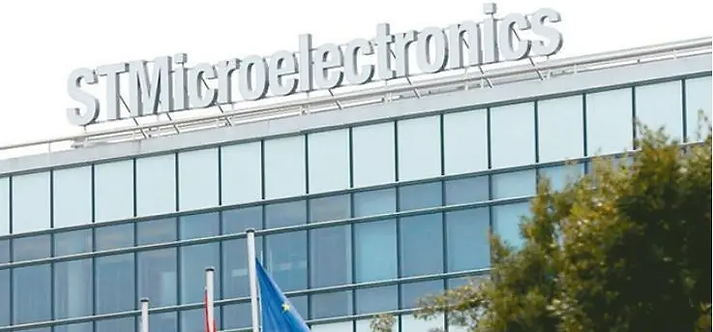
The French Ministry of Economy and Finance is supporting a new semiconductor factory with a financial assistance package of around 2.9€ billion. The factory, a joint venture between STMicroelectronics and Global Foundries, will be built near Grenoble, France. With a total investment of 7.5€ billion, the project aims to reach full capacity and create 1,000 jobs by 2028. The increased chip production capacity within the EU resulting from this collaboration will have a significant impact on sectors such as automotive, IoT, and mobile applications.
The financial assistance agreement was signed by the French Minister of Economy and Finance, Le Maire, and representatives from STMicroelectronics and Global Foundries. The project has also received approval from the European Union, highlighting its long-term implications for economic growth, job creation, technological advancement, national security, European autonomy, and future investments in the French semiconductor industry.
USA Invests Into $2.75 Billion Semiconductor Facility in India
US President Joe Biden and Indian Prime Minister Narendra Modi have jointly unveiled several defense and commercial agreements aimed at bolstering the military and economic bonds between their respective countries. Micron Technology will invest over $800 million in a $2.75 billion semiconductor facility in India, Applied Materials will establish a semiconductor center, and Lam Research plans to train up to 60,000 engineers in India (Sink & Leonard, June 2023).
In addition, General Electric Co. intends to collaborate with Hindustan Aeronautics Ltd., a state-owned Indian company, to co-manufacture F414 engines for the Tejas light-combat aircraft. This partnership is a strategic move to enhance defense capabilities and foster technology-sharing, particularly in response to China's increasing assertiveness in the Indo-Pacific region. These partnerships strengthen defense capabilities, secure supply chains, and promote economic growth and technological advancements.
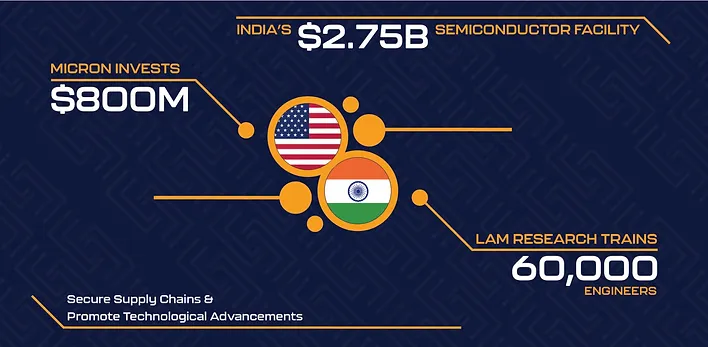
Advancements of this partnership foster plenty of opportunities for competitive sourcing and the expansion of Indian manufacturers in the electronic components market. As ASC diligently expands its operations and strives to streamline acquisition processes, we have appointed a new Sales Director for the region. Additionally, we are actively preparing a new office location that will aptly reflect the industry's significance within the context of the nation's partnership.
Notable Acquisitions in the Global Electronics Industry
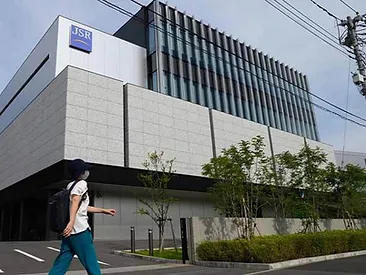
The Japanese government has announced a significant agreement worth $6.3 billion to acquire and privatize JSR Corp., a renowned global provider of chipmaking compounds. This move allows the government to assume direct control over JSR Corp. and comes at a critical juncture where escalating tensions between the United States and China pose a potential risk of fragmentation within the $550 billion global semiconductor industry (Furukawa, 2023).

IBM will acquire the software firm Apptio for a substantial sum of $4.6 billion. This transaction represents the seventh acquisition made by IBM in the current year, reflecting the determined efforts to steer the company towards becoming a leading enterprise in the domains of hybrid-cloud solutions and artificial intelligence (Lung and Frier, 2023).
Test Reports Indicate a Surge in Demand for Diodes in 2023
The analysis of testing reports of our lab combined with third party testing house reports reveals a shift in the most frequently tested electronic components. The 2023 reports highlight the rising interest in Diodes, becoming the second most tested component, surpassing MCU microcontrollers and FPGAs from 2022. Previously, MCUs held the second spot while MOSFETs dominated the testing space. Diodes have gained traction since 2022, sparking more interest and becoming more prevalent. In 2021, Diodes were tested less frequently compared to Transceivers and MCUs.
Texas Instruments has consistently been the top tested manufacturer since 2021. In 2023, Onsemi has overtaken STMicro. These shifts indicate a growing demand for Diodes and MOSFETs, whether from Texas Instruments or Onsemi.
ASC Global’s Solution for Counterfeit Products & Supply Chain Resilience
The COVID pandemic paved the way for new emerging trends focused on supply chain management and addressing extensive quality control (Smith, 2023). Some of them include:
- Supply Chain Resilience: Enforcing stricter risk management which improves traceability and transparency.
- Counterfeit Mitigation: Being aware of the risks associated with counterfeit components in the industry harming reliability for both manufacturers and suppliers.
By implementing these practices, backed by our AS6081, ISO9001, and AS9120 certifications, supply chains can avoid counterfeit issues when doing business with ASC. In addition to a 26-year strong network in the industry, we offer inventory and excess stock not to be found anywhere on the open market.
In combination with in-house or third-party testing labs, we can ensure quality and transparency for clients. This results in ASC Global providing competitive lead times for all component classifications to build up our clients’ supply chain resilience.
Are you currently searching for any electronic components? Send us your requirements, and we will reply within 1 hour. “Quote Now” button.
Sources
Furukawa, Y., & Hsu, W. (2023, June 26). Japan unveils $6 billion deal to buy out Chip Linchpin JSR. Bloomberg.com. https://www.bloomberg.com/news/articles/2023-06-26/japan-unveils-6-billion-deal-to-buy-out-chip-linchpin-jsr cmpid=BBD062723_TECH&utm_medium=email&utm_source=newsletter&utm_term=230627&utm_campaign=tech
Lung, Natalie and Frier, Sarah (2023, June 26). IBM Will Buy Software Company Apptio for $4.6 Billion. Bloomberg.com. https://www.bloomberg.com/news/articles/2023-06-26/ibm-agrees-to-buy-apptio-for-4-6-billion-in-automation-push?cmpid=BBD062723_TECH&utm_medium=email&utm_source=newsletter&utm_term=230627&utm_campaign=tech
Sink, J., & Leonard, J. (2023, June 22). Modi press conference: India, US deals include drones, jet engines, space, Chips. Bloomberg.com. https://www.bloomberg.com/news/articles/2023-06-22/biden-and-modi-deals-span-drones-jet-engines-space-and-chips#xj4y7vzkg
Smith, H. (2023, May 18). Emerging Trends In The Electronic Components Distribution Industry [Review of Emerging Trends In The Electronic Components Distribution Industry]. Tech Bullion; FinTech News 7 Information. https://techbullion.com/emerging-trends-in-the-electronic-components-distribution-industry/