
Receive Your Market Report
Get the latest PDF version of the report, all future reports, occasional surveys, and special offers delivered right to your inbox.
For information on our commitment to protecting your privacy, please review our Privacy Policy.
Lead TImes
EOL Reports
News Flash
Testing Analysis
Earning Recap
Products & MFRS
LEAD TIMES
We cover the current lead times and pricing trends for Analog, Power, Passive, Memory, Logic & Digital, and Electromechanical components.
END-OF-LIFE REPORTS
We highlight the EOL components from major brands, helping companies manage obsolescence and plan for replacements.
Industrial MicroSD &
Semiconductor Supply Chain Updates
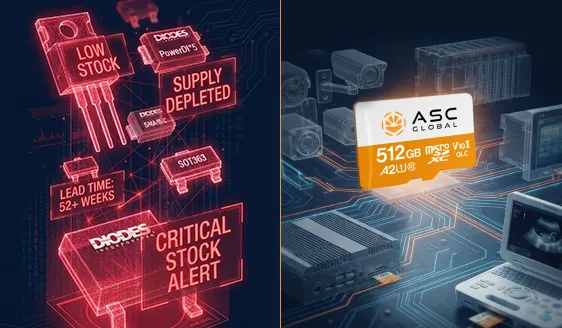
Explore our latest articles covering industrial-grade MicroSD solutions, the Diodes Inc. component shortage, and the impact of Section 232 semiconductor tariffs on global procurement and supply chain resilience.

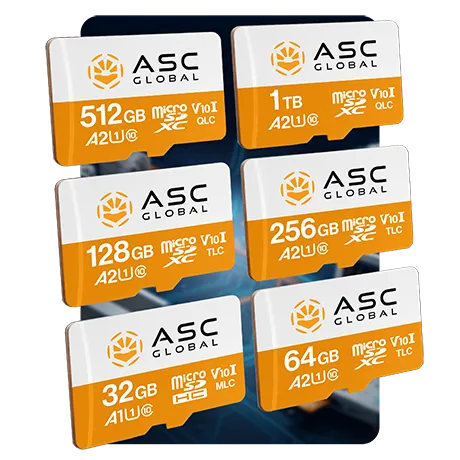
Industrial-Grade MicroSD Solutions
ASC Global delivers industrial-grade MicroSD manufacturing solutions designed for OEMs operating in industrial automation, automotive, security, telecom, embedded, and IoT environments. With scalable production, long-term supply commitments, industrial SLC architecture, and dedicated engineering support, we help manufacturers reduce procurement risk, improve reliability, and maintain production continuity despite global memory market volatility.
- Industrial-Grade Performance: SLC-based MicroSD solutions built for continuous-write applications, operating temperatures from -40°C to +85°C, SD/SPI compatibility, and a 36-month warranty.
- Reliable Manufacturing & Supply: Up to 1.5 million units per month, flexible OEM scaling, forecast-based manufacturing, priority allocation, and fast onboarding with engineering support.
- Lower Supply Chain Risk: Diversified NAND sourcing, shortage mitigation programs, private-label capabilities, and procurement strategies that can reduce total cost of ownership by up to 30% while protecting production continuity.
Diodes Inc. Shortage
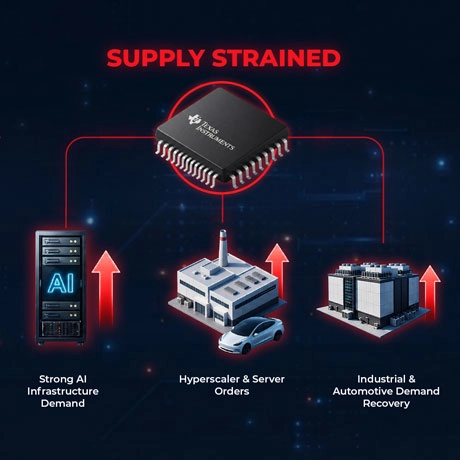
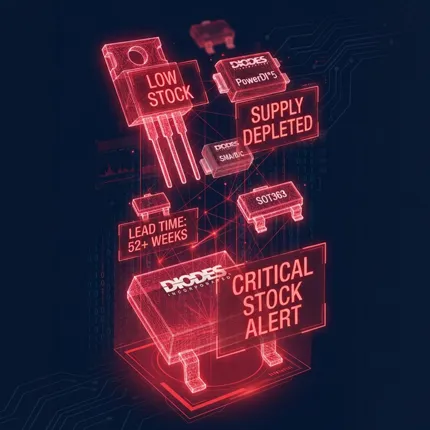
The ongoing shortage of Diodes Incorporated components is increasing lead times, product allocations, and procurement costs for manufacturers worldwide. Driven by growing AI infrastructure demand and constrained semiconductor capacity, the shortage is forcing OEMs and EMS providers to adopt qualified alternative components and more resilient sourcing strategies to maintain production continuity.
- Supply Constraints: Lead times for many Diodes Incorporated products have increased from 8–10 weeks to more than 48 weeks, impacting power, timing, and discrete semiconductor devices.
- Affected Products: High-demand MOSFETs, Schottky and Zener diodes, timing ICs, and bipolar transistors used in industrial automation, embedded systems, and AI infrastructure remain under the greatest pressure.
- How ASC Global Helps: Global sourcing capabilities and authorized Diotec Semiconductor alternatives provide specification-compatible, fully traceable replacement solutions that reduce lead-time risk and support uninterrupted manufacturing.
Section 232 Semiconductor Tariffs
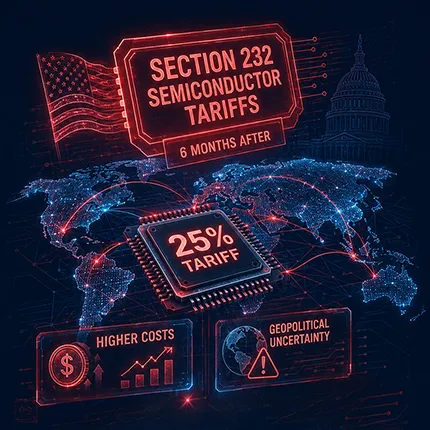
Six months after the implementation of the U.S. Section 232 semiconductor tariffs, global procurement strategies continue to evolve as manufacturers adapt to higher costs, geopolitical uncertainty, and ongoing supply constraints. The tariffs have accelerated supplier diversification, strategic inventory planning, and alternative sourcing, making supply chain resilience a critical priority throughout 2026.
- Market Impact: Continued pricing volatility, selective lead-time extensions, and geopolitical risks are reshaping semiconductor procurement across industrial, automotive, aerospace, medical, and telecommunications sectors.
- Procurement Trends: Organizations are expanding supplier qualification, validating alternative components, and strengthening inventory strategies to reduce exposure to future trade disruptions.
- How ASC Global Helps: Global sourcing, qualified alternatives, product validation, and strategic inventory programs help manufacturers improve component availability, control costs, and maintain production continuity in a changing market.

Strategic Recommendations
for Procurement Leaders
From industrial-grade memory solutions to component shortages and evolving trade policies, timely market intelligence is essential for minimizing risk and maintaining production continuity. Explore our latest insights to make more informed procurement decisions and strengthen your supply chain strategy.
TEST & FAILURE RATES
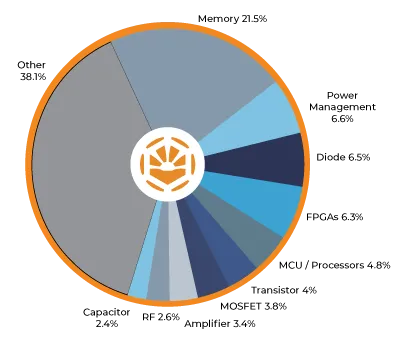
In Q4 2025, diodes and transistors showed the highest failure rates, indicating stress in power and signal paths. MOSFETs followed, while FPGAs and logic ICs required ongoing validation. Memory, MCUs, RF, and power management devices recorded lower but persistent test exposure across industrial and communications systems.
By Device Type
Top 10 Component Types by Failure Rate
| 1. Hard Drives 2. Filter 3. CPU 4. Isolated DC / DC Converters 5. Transceiver |
6. System on Chip (SOC) 7. Optocoupler 8. Microprocessor 9. FPGA 10. RF and Wireless |
This ranking is determined by the proportion of failed results compared to the total units tested in each category. While some failures stem from aging or mishandling, others could indicate more serious quality issues or potential counterfeit threats
EARNINGS RECAP
This report summarizes the latest earnings results from the biggest brands in electronic components, highlighting key trends and financial insights.
AUTOMOTIVE
Toyota Motor Corp.
- Revenue: $160.4 B (+4.4% YoY)
- Net income: $12.2 B
- Net Profit Margin: 7.6%
General Motors
- Revenue: $44.0 B (-1.0% YoY)
- Net income: $2.6 B
- Net Profit Margin: 6.0%
Ford Motor Company
- Revenue: $50.2 B (+5.0% YoY)
- Net income: $1.8 B
- Net Profit Margin: 3.6%
PRODUCT UPDATES
MANUFACTURER UPDATES

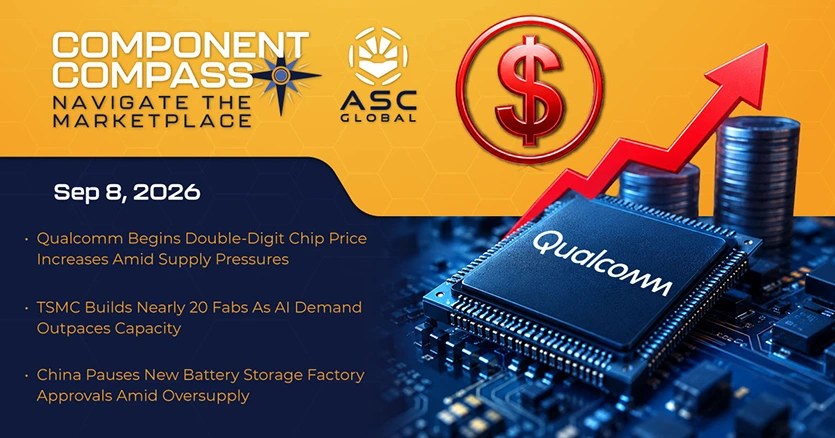
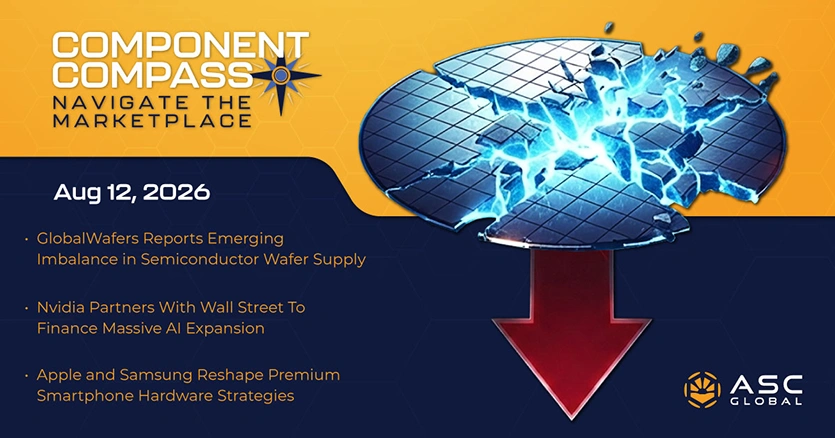
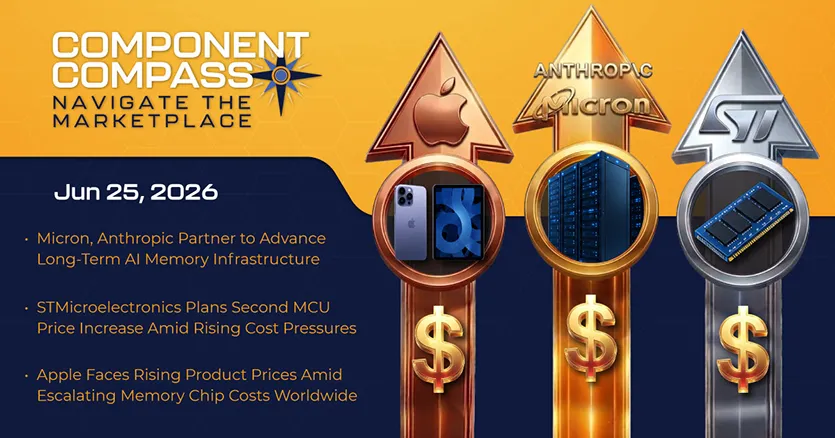
For more news and industry insights dive into our Component Compass
Market Report
What does the ASC Market Report cover, and what is it designed to help procurement teams do?
The ASC Market Report is a quarterly analysis of the electronic components and semiconductor market, written for procurement teams, supply chain managers, and engineers making component sourcing and planning decisions. Each edition covers the supply and demand dynamics, pricing trends, lead time forecasts, and inventory conditions shaping the market for the coming quarter.
The report draws on ASC's global sourcing network and market visibility across nine office locations to produce analysis that reflects current conditions across regional markets and distribution channels. Topics covered in recent editions include the AI-driven memory supercycle and its effects on DRAM and NAND Flash availability, supply chain realignment driven by tariff and geopolitical developments, industrial MicroSD manufacturing constraints, and the Diodes Inc. shortage affecting procurement teams across multiple end markets. The aim of each edition is not to summarize news that has already been widely reported, but to interpret market conditions in terms of what they mean for sourcing decisions in the quarter ahead.
Our procurement team needs forward-looking guidance on pricing and lead times to plan our sourcing strategy for the next quarter. Does the Market Report provide that level of detail?
Yes. Lead time direction and pricing trend analysis are core elements of every Market Report edition. The report covers which component categories are tightening in supply or experiencing price movement, what the underlying drivers are, and what the near-term outlook looks like for the following quarter. That analysis is intended to help procurement teams decide where to build inventory buffers, where to accelerate RFQs ahead of anticipated lead time increases, and where vendor diversification is most important.
The report covers specific component categories and manufacturers where conditions are changing, which is more directly useful for procurement planning than a general market summary. Rather than presenting data without interpretation, the Market Report connects market conditions to their practical sourcing implications, which is the information a procurement team needs to take action before conditions deteriorate.
We have been reading about an AI-driven memory supercycle affecting DRAM and Flash availability. Does the Market Report address this in detail?
The AI-driven memory supercycle is a central topic in recent Market Report editions. The structural dynamic is that AI infrastructure investment has redirected substantial DRAM and NAND Flash manufacturing capacity toward high-bandwidth memory and enterprise-grade storage devices. That supply shift reduces the allocation available for standard density commercial and industrial memory, which is reflected in lead time increases and price pressure across device families that had previously been stable and readily available.
For procurement teams, the practical implication is that memory components that were reliably available with short lead times now require earlier sourcing action and more active supply planning. The Market Report covers which memory device categories are most affected, how pricing is moving across density and interface segments, and what the near-term availability outlook looks like given current capacity allocation trends. It is the right starting point for a procurement team that needs to understand the scope of the issue before deciding how to adjust their sourcing approach for affected parts.
How do we access the Market Report, and is there a cost?
The Market Report is available at no cost through ASC's website. Each quarterly edition is accessible directly on the Market Report page, and the PDF version of the report can be received by email by registering with your name, company, and email address through the form on the page. Registration also delivers future editions directly to your inbox as they are published.
There is no requirement to be an existing ASC customer to access the Market Report. It is published as a free resource for procurement teams, engineers, and supply chain professionals who need current market intelligence to inform their sourcing and planning decisions.
We already use third-party market research tools for supply chain intelligence. What does the ASC Market Report provide that those tools do not?
General market research tools are typically designed for financial benchmarking or broad industry analysis, which means they reflect publicly reported data and tend to lag behind actual conditions in distribution and open-market channels. The ASC Market Report is built from visibility into live sourcing activity across ASC's global network of over 2,000 manufacturers and suppliers across nine office locations worldwide, giving it a distribution-level view of where supply is tightening, where pricing is moving in the open market, and which specific component categories are experiencing real availability constraints before those conditions are reflected in public reporting.
For procurement teams making decisions about specific component families and sourcing channels, that ground-level channel visibility is more applicable than general market benchmarking. The Market Report is also cross-referenced with the biweekly Component Compass, which tracks market developments between quarterly editions, so the analysis is grounded in current conditions rather than being limited to what was observable at the start of the reporting period.