
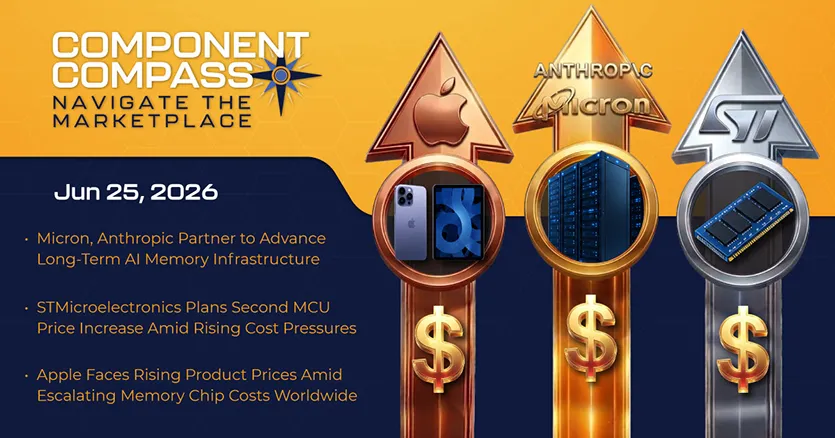
Micron, Anthropic Partner to Advance Long-Term AI Memory Infrastructure
Micron and Anthropic have signed a multi-year strategic agreement covering AI memory supply, infrastructure co-development, enterprise AI adoption, and Micron's investment in Anthropic. The partnership will optimize high-bandwidth memory, DRAM, and SSD performance for AI workloads while securing long-term component supply, supporting the rapid expansion of next-generation AI infrastructure and Claude model deployment.

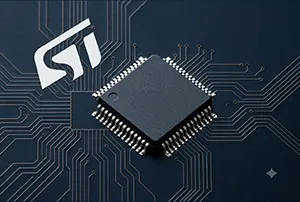
STMicroelectronics Plans Second MCU Price Increase Amid Rising Cost Pressures
STMicroelectronics will reportedly implement its second MCU price increase of 2026 on June 28, driven by persistent inflation, higher raw material and logistics costs, and strong AI-related demand. The move reflects a broader semiconductor pricing trend, with major suppliers including NXP, Infineon, and Texas Instruments also raising prices across selected product lines.
Apple Faces Rising Product Prices Amid Escalating Memory Chip Costs Worldwide
Apple is reportedly preparing product price increases as AI-driven demand continues pushing DRAM and NAND memory costs higher. Rising component prices are squeezing margins across iPhones, iPads, Macs, and other devices, making increases increasingly difficult to avoid. The trend highlights how AI infrastructure investment is reshaping semiconductor supply chains and consumer electronics pricing.


TSMC Reduces 28nm Capacity, Creating Opportunities for Mature-Node Foundry Rivals
TSMC is reportedly cutting 28nm wafer production by over 25% as it reallocates capacity to advanced nodes and AI packaging. The shift could redirect mature-node orders to UMC and Vanguard International Semiconductor (VIS), strengthening their utilization and pricing power. While TSMC says its mature-node strategy remains unchanged, industry demand continues favoring alternative foundry suppliers.
MediaTek Raises Chip Prices While Securing Google TPU v9 Win
MediaTek plans 10–20% chip price increases across mobile SoCs and PMICs, citing rising supply chain, material, and logistics costs. The company also reportedly secured a key role in Google’s TPU v9 program by providing a 336G SerDes solution, strengthening its AI ASIC business and expanding opportunities in hyperscale AI infrastructure.


Renesas Expands Renesas 365 Platform Through Strategic Pictorus Software Acquisition
Renesas has completed its acquisition of Pictorus, strengthening the Renesas 365 platform with no-code, AI-assisted embedded software development capabilities. The integration enables engineers to develop, test, and deploy motor control and real-time embedded applications more efficiently, accelerating innovation while simplifying development workflows across industrial, automotive, and IoT markets.
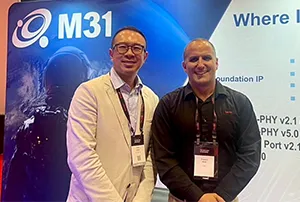
M31 and TSMC Expand Advanced Node IP Collaboration Ecosystem
M31 Technology is collaborating with TSMC to strengthen the advanced-node design IP ecosystem, focusing on next-generation interface solutions for 2nm-class processes. The partnership aims to improve high-speed connectivity, power efficiency, and design integration for AI and HPC chips. It reinforces both companies’ role in accelerating silicon innovation through tighter foundry–IP co-optimization across advanced process nodes.

Get biweekly updates to your inbox
More Component Compass news

U.S. Tightens Scrutiny on Steel and Aluminum Tariff Exemptions
Steel and aluminum producers, including major exporters from Canada and Mexico, face stricter U.S. tariff exemption rules under Section 232 adjustments. Regulators are increasing documentation requirements and tightening eligibility checks to prevent misuse, adding friction to cross-border supply chains. The changes aim to improve enforcement but raise compliance costs for North American metals trade flows.

Physical AI Accelerates Private 5G Growth in Industrial Markets
Physical AI is increasingly driving adoption of private 5G networks as enterprises deploy real-time, autonomous systems in manufacturing, logistics, and energy sectors. The combination enables low-latency connectivity, deterministic performance, and edge intelligence for robotics and IoT. Analysts say this convergence is shifting private 5G from pilot projects toward scalable industrial infrastructure supporting Industry 4.0 deployments.

U.S. Spectrum Auction Funds Removal of Chinese Telecom Equipment
A U.S. wireless spectrum auction raised over $3.5 billion, with most proceeds earmarked to fund the FCC’s “Rip and Replace” program aimed at removing Chinese telecom equipment from domestic networks. The initiative targets vendors like Huawei and strengthens network security by reimbursing carriers for replacement costs and reducing reliance on foreign infrastructure.

Littelfuse Launches Ultra-Low-Power Omnipolar TMR Sensor Switch
Littelfuse has introduced a new omnipolar TMR switch sensor designed for ultra-low-power operation in compact, battery-powered systems. The device leverages tunneling magnetoresistance technology with integrated CMOS signal processing to deliver high sensitivity, fast response, and strong noise immunity. It targets applications such as smart meters, IoT devices, and industrial automation where energy efficiency is critical.
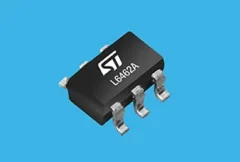
STMicroelectronics Introduces Multiplier-Less PFC Controller for Efficiency Gains
STMicroelectronics has launched a new multiplier-less power factor correction (PFC) controller designed to reduce bill-of-materials costs and improve energy efficiency in compact power supplies. The device replaces traditional analog multiplier circuits with a current-shaping approach, enabling simpler design, lower component count, and improved performance in applications such as chargers, adapters, and consumer electronics.
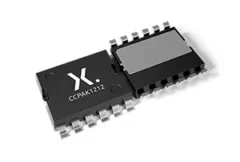
Nexperia Launches Industrial 650V GaN FETs for High-Efficiency Power Systems
Nexperia has introduced new industrial-grade 650V gallium nitride (GaN) FETs designed for high-power density and high-frequency switching in demanding applications. The devices target power conversion systems in industrial automation, telecom, renewable energy, and data centers. They deliver lower switching losses, improved thermal performance, and greater efficiency, supporting next-generation compact and energy-optimized power electronics architectures.
Component Compass Timeline

Infineon Nvidia Gan Power Solutions AI Data Centers
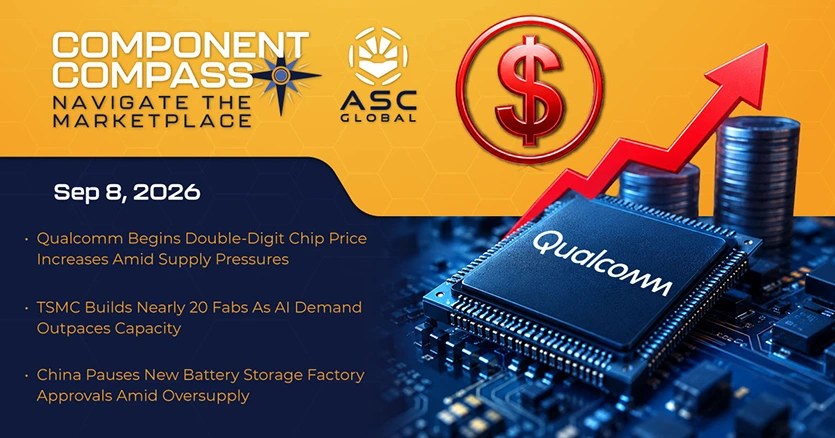
Qualcomm Chip Price Increases Supply Pressures
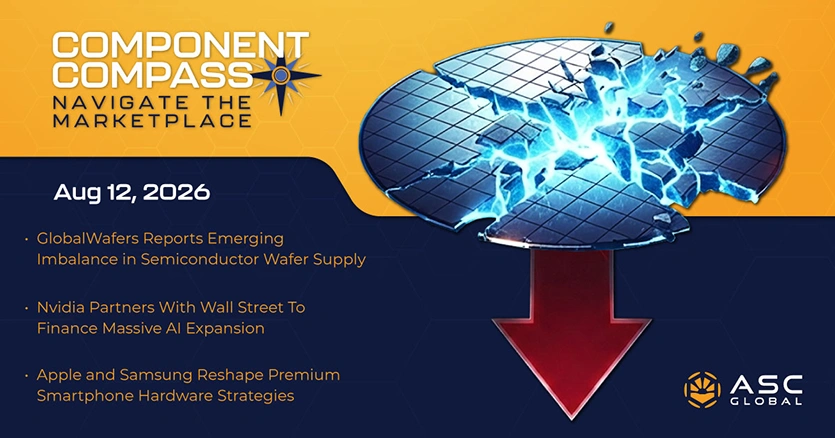
GlobalWafers Semiconductor Wafer Supply Imbalance
STMicroelectronics MCU Price Hikes, Apple Device Inflation, and Micron–Anthropic AI Memory Supply Shift
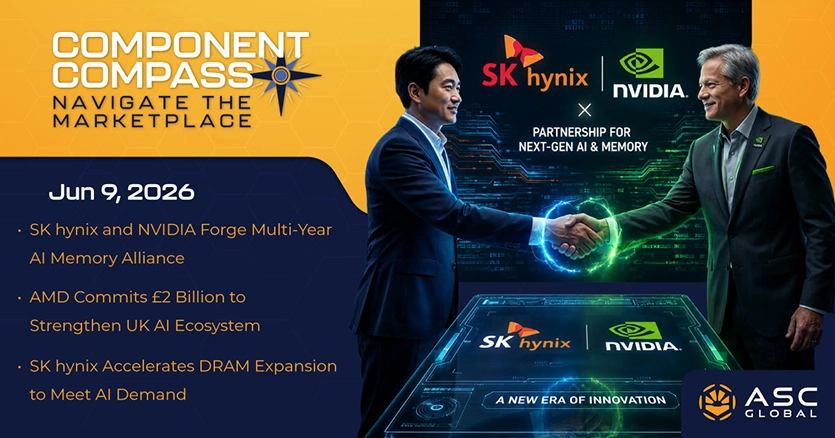
SK hynix and NVIDIA Forge AI Memory Alliance
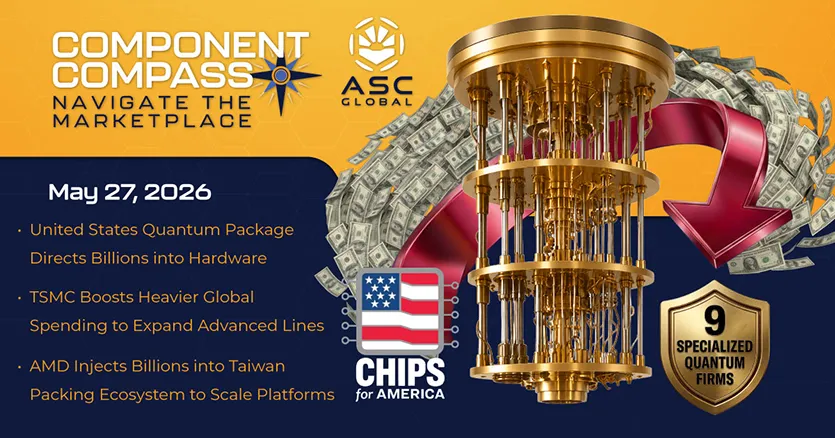
United States Quantum Package Directs Billions
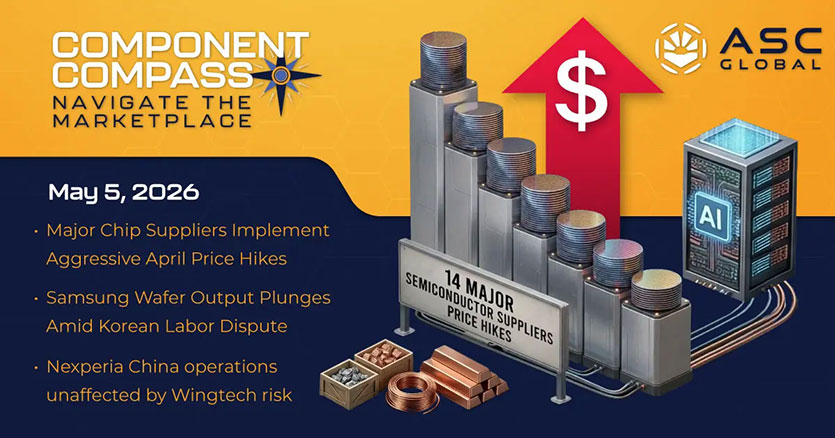
Major Chip Suppliers Implement Aggressive April Price Hikes
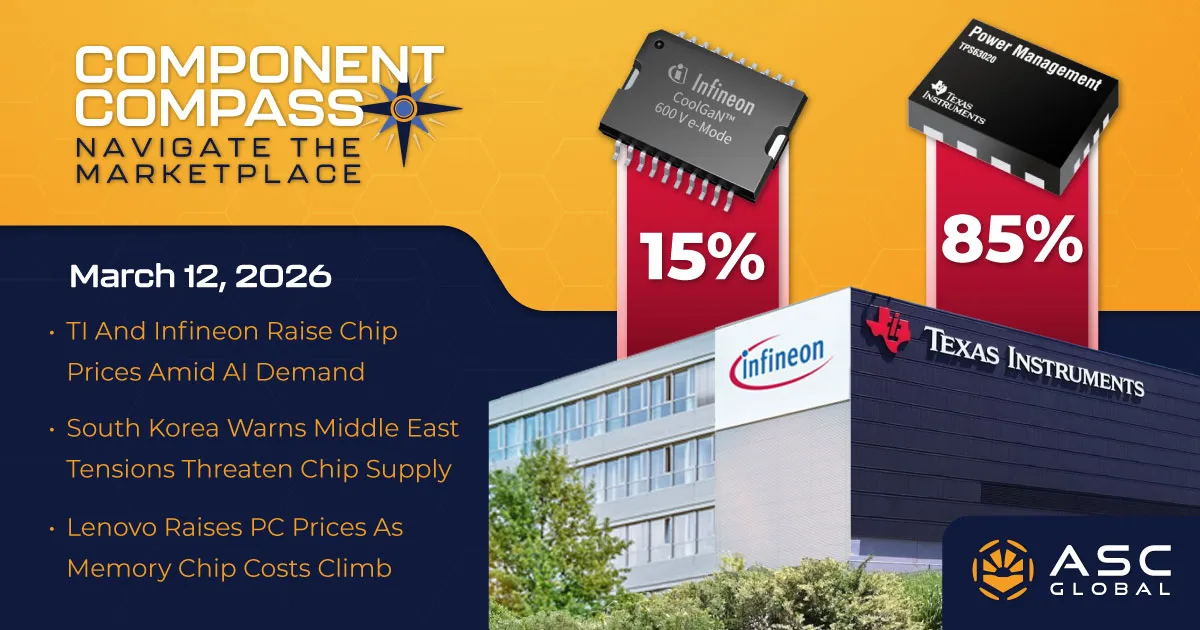
Texas Instruments and Infineon Raise Chip Prices Amid AI Demand
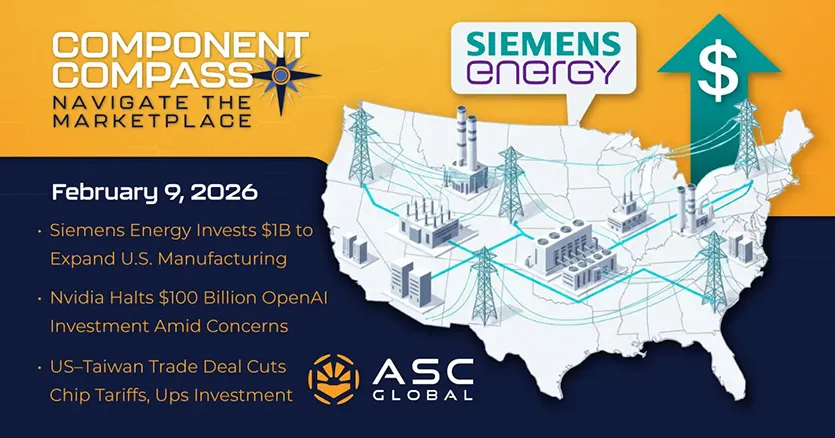
Siemens Energy Invests $1B to Expand U.S. Manufacturing

Nexperia Conflict Deepens Threatening Chip Stability
Market Report

For more news and industry insights dive into our Market Report
INDUSTRY UPDATES
ASC Global brings you with our Component Compass report the latest semiconductor industry findings to provide valuable guidance for maneuvering market intervals. We excel in supply chain strategies that effectively address market volatility.
If any questions or concerns arise, kindly reach out to your Account Manager or our support team at info@ascglobal.com | +1 954 718 2950.