
Navigating the 2026 Semiconductor Market
Aug 19, 2026
The global semiconductor landscape in 2026 is defined by a paradox: historic, record-breaking revenue figures coexist with structural supply chain fragility. As the industry surges toward unprecedented milestones, the market is no longer a “rising tide that lifts all boats.” Instead, it has become a zero-sum game driven by a relentless, AI-fueled expansion.
For procurement teams and supply chain leaders, the message is clear: the “normal” market conditions of the past have vanished. To succeed in this new environment, organizations must fundamentally rethink their sourcing strategies.
Market Concentration and Competitive Landscape
The primary driver behind this volatility is the explosion of AI infrastructure investment. While AI chips represent nearly half of total industry revenue, they account for less than 0.2% of shipment volume. This has shifted the industry from a “volume-based” model to a high-margin, “value-based” one.
- AI Leadership: The global chip industry market value is highly concentrated, with the top three companies holding 80% of the share, showing that AI-leading companies almost have resource dominance. While NVIDIA and AMD continue to dominate the AI training market, custom ASICs such as Google TPU and Amazon Trainium are capturing a portion of inference and specialized workload orders, evolving the competitive landscape toward diversification.
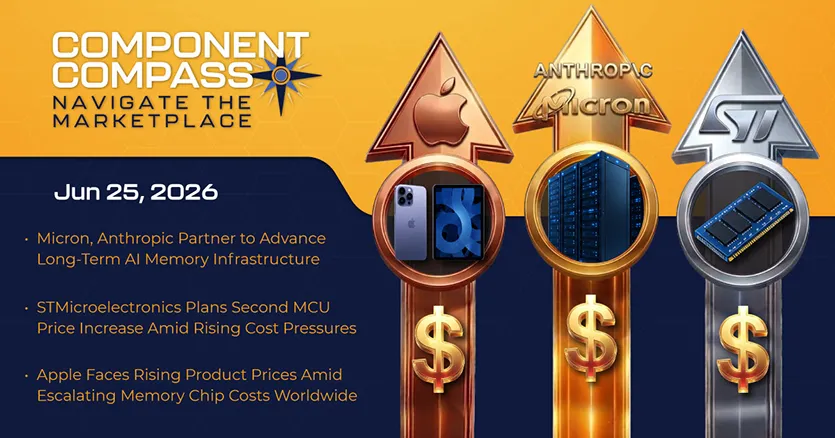
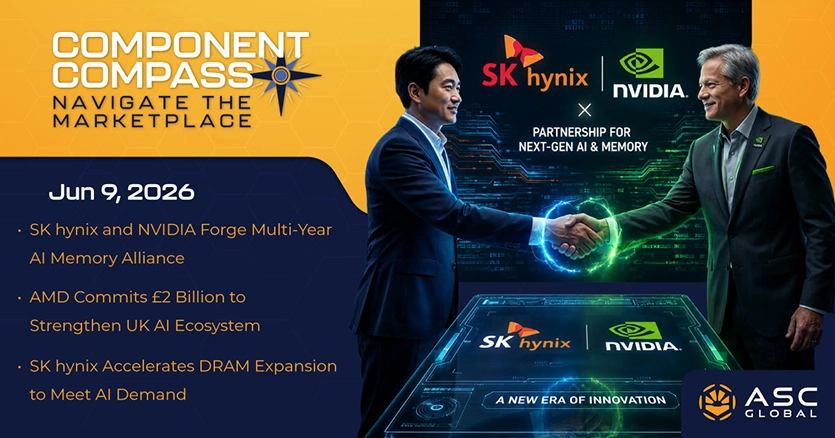
- Memory Dominance: The memory market is heavily concentrated under Samsung, SK Hynix, and Micron. Having made High Bandwidth Memory (HBM) a strategic priority, these manufacturers have watched consumer memory shortages strengthen their overall pricing power.
- Foundry Dynamics: On the wafer foundry side, TSMC holds absolute leadership in advanced processes and packaging, though Intel Foundry and Samsung Foundry are aggressively leveraging the window of opportunity created by AI orders to catch up.
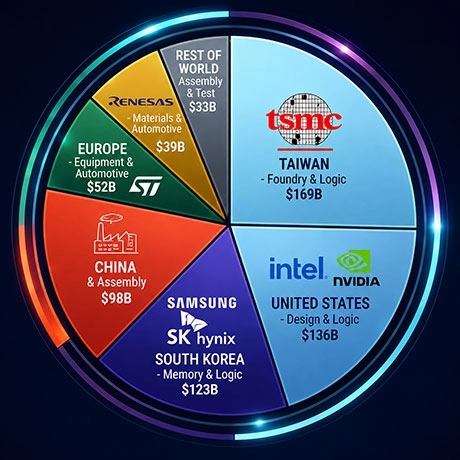
Global Chip Industry Market Value
Manufacturer Actions and Long-Term Horizon

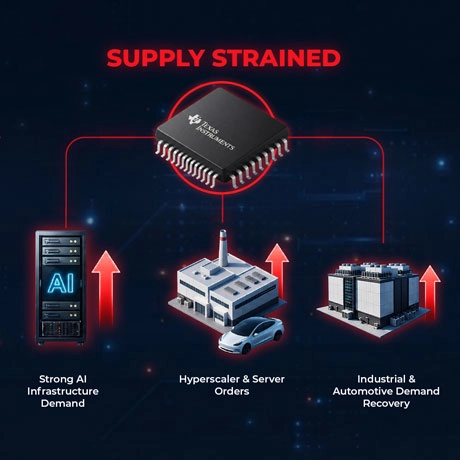
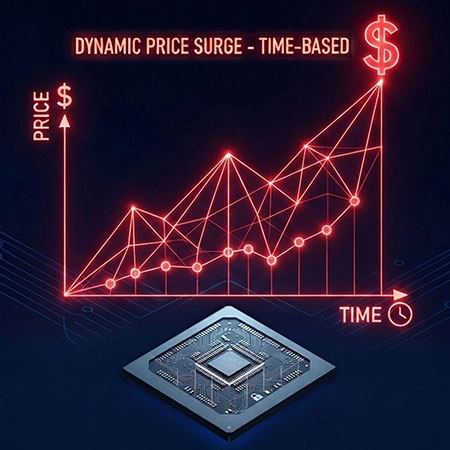
Manufacturers are fundamentally changing their playbooks to cope with this surge. Key suppliers including Texas Instruments, ON Semiconductor, STMicroelectronics, Infineon, Murata, and Yageo have implemented consecutive rounds of price increases across key product families. Beyond pricing, manufacturers are tightening allocation policies, limiting pull-in requests, reducing pricing flexibility, and prioritizing production for AI infrastructure, automotive OEMs, hyperscale cloud providers, and strategic Tier-1 customers. Some product lines are no longer accepting new orders, while others are increasingly tied to long-term supply commitments.
While manufacturers continue investing heavily in additional capacity to meet this demand, meaningful production from these new fabrication facilities is not expected until mid-2027. Because structural supply and demand imbalances will take years to fully clear, industry experts note that these pricing increases and supply constraints may persist throughout the entire decade.
The Cost of Waiting Is Increasing
Earlier this year, the biggest risk was assuming the market would continue to normalize. Today, the bigger risk is assuming manufacturers will return to the way they’ve operated in the past. Longer planning horizons, stronger supplier relationships, earlier component qualification, and better market intelligence are rapidly becoming competitive advantages. Companies that continue treating procurement as a reactive function may find themselves competing for supply after the market has already moved.
As industry leadership notes, the recent inventory correction created a false sense of normalcy. The structural challenges in legacy supply, geopolitical instability, and policy unpredictability have not resolved but have simply moved off the front page. Today’s market isn’t simply experiencing another pricing cycle; it is undergoing a structural shift in how supply is allocated, how manufacturers prioritize customers, and how procurement organizations must plan for the future.
This is not a market that rewards patience. It rewards organizations that review exposure early, validate alternate sourcing strategies, and secure coverage on critical components before the next wave of pricing and allocation changes takes effect.
How ASC Global Can Help
In a market where the rules have fundamentally changed, navigating supply chain complexity requires deep technical expertise, global market visibility, and proactive risk mitigation.
ASC Global serves as an essential extension of your procurement organization, helping you transform from a reactive posture to a strategic one. We provide:
- Risk Identification & Mitigation: We help you identify potential component shortages and sourcing risks before they escalate, ensuring your production remains uninterrupted.
- Market Intelligence: Our specialists provide the visibility needed to track which product families and nodes are under pressure, helping you make informed, data-backed procurement decisions.
- Advanced Sourcing Strategies: Whether you are dealing with extended lead times or allocation challenges, we provide the global sourcing reach and expertise to secure critical components and maintain your operational momentum.
The 2026 semiconductor market is undoubtedly challenging, but it is not unmanageable. It simply requires a new playbook. By embracing proactive planning and leveraging the right global partners, procurement teams can navigate these structural shifts and secure the components they need to thrive.
Looking Toward the Future
Are you ready to adapt your procurement strategy for the new market reality? Contact ASC Global today to learn how our sourcing specialists can help you secure your supply chain.
Are you currently searching for any electronic components? Send us your requirements, and we will reply within 1 hour.