
ASC Global's biweekly Component Compass to Navigate the Marketplace

Get biweekly updates to your inbox
First Name(Required)
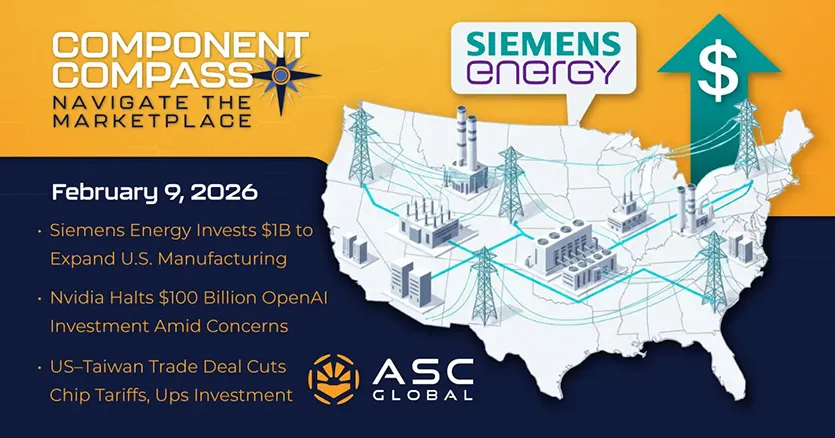
Component Compass banner highlighting Siemens Energy's $1 billion investment in U.S. manufacturing expansion. The image features power grid infrastructure, industrial manufacturing facilities, electrical equipment, and energy technology, representing efforts to increase production capacity for grid modernization, AI-driven data center growth, industrial electrification, and rising electricity demand across the United States.

Siemens Energy Invests $1B to Expand U.S. Manufacturing

Siemens Energy will invest $1 billion to expand U.S. manufacturing for grid and gas turbine equipment, creating over 1,500 highly skilled jobs. The program includes facility expansions across multiple states and a new Mississippi switchgear plant, supporting surging electricity demand from data centers, AI infrastructure, and industrial electrification.

Nvidia Halts $100 Billion OpenAI Investment Amid Concerns

Nvidia has paused a proposed $100 billion OpenAI investment, citing its non-binding status, weak financial discipline, and intensifying competition. CEO Jensen Huang said Nvidia may still invest in OpenAI’s IPO, but at a far smaller scale. OpenAI faces heavy losses, massive data center commitments, and is turning to advertising to boost revenue.

US–Taiwan Trade Deal Cuts Chip Tariffs, Ups Investment

The United States and Taiwan reached a trade that caps tariff rates on imports from Taiwan at 15%, encouraging Taiwanese chipmakers to expand U.S. production, and securing up to $500 billion in investment and credit commitments. The agreement strengthens supply chains, boosts major equipment suppliers, and reflects Washington’s view of chips as a national security priority amid rising China tensions.

NXP Sees Automotive Chip Recovery After Slower Growth

NXP reported slower-than-expected automotive growth in Q4 2025 as customers continued inventory reductions, though revenue still rose 4.8% year on year. Management sees early signs of recovery as the inventory overhang nears an end. A slightly stronger-than-expected Q1 outlook suggests improving conditions for mature-node automotive semiconductors.

More Component Compass news
Illustration of a futuristic semiconductor manufacturing complex featuring advanced chip fabrication facilities, automated production lines, AI-driven robotics, and next-generation wafer processing equipment. The image represents Tesla's proposed TeraFab initiative, highlighting in-house semiconductor manufacturing, advanced packaging, 2nm process technology, supply chain independence, and large-scale chip production designed to support future electric vehicles, AI systems, and autonomous technologies.

Tesla Explores TeraFab to Secure In-House Chip Supply

Tesla is considering “TeraFab,” a large-scale in-house semiconductor manufacturing concept to reduce reliance on external suppliers. The plan could span logic, memory, advanced packaging, and 2nm processes. With 2026 capex exceeding $20 billion, chip production may become strategic, with potential capacity reaching 100,000 wafers monthly initially.
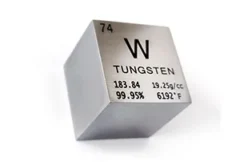
Illustration of tungsten ore, industrial metals processing, and manufacturing equipment within a global supply chain environment. The image represents record-high tungsten prices driven by China's export controls, reduced mining output, and growing industrial demand. Visual elements highlight the metal's importance to aerospace, defense, electronics, machinery manufacturing, and the supply chain challenges affecting critical industrial materials worldwide.

Tungsten Prices Hit Records as China Tightens Export Controls

Tungsten prices surged to record highs in January as Chinese export controls, reduced mining quotas, and strong industrial demand tightened global supply. With China dominating production and exports down nearly 40% year on year, manufacturers across aerospace, defense, electronics, and machinery face rising costs and potential supply disruptions.

Illustration of an advanced semiconductor fabrication facility producing next-generation 2nm chips, featuring silicon wafers, cleanroom manufacturing equipment, and AI-driven computing infrastructure. The image represents TSMC's fully booked 2nm production capacity, highlighting strong demand from AI, mobile, and cloud computing markets, advanced semiconductor manufacturing, leading-edge process technologies, and growing pressure on chip packaging and supply chain capacity.

TSMC 2nm Capacity Tightens as AI, Mobile Demand Surges

TSMC’s 2nm capacity is reportedly fully booked as AI and mobile demand converge, with Apple securing over half of early supply. AMD, Google, and AWS plan adoption from 2026–2027, while NVIDIA may be first to adopt TSMC’s 1.6nm A16 process in 2028. Advanced packaging capacity is also tightening.

Illustration of a high-volume electronics manufacturing facility producing multilayer ceramic capacitors (MLCCs), featuring automated assembly lines, precision equipment, and quality control systems. The image represents Samsung Electro-Mechanics' Tianjin plant operating at full capacity, highlighting strong demand from electric vehicles, automotive electronics, AI servers, and the growing need for advanced passive components across global technology and transportation markets.

Samsung Runs Tianjin MLCC Plant at Full Capacity

Samsung Electro-Mechanics is operating its Tianjin MLCC plant 24/7 as automotive demand accelerates. Rising EV adoption, increasing electronics content per vehicle, and growing AI server shipments are lifting utilization rates. Orders rose about 30% year on year in Q4 2025, with MLCC prices edging higher.

Illustration of an aviation maintenance and repair facility featuring aircraft components, technicians, logistics operations, and MRO service equipment. The image represents VSE Corporation's acquisition of Precision Aviation Group, highlighting expanded aviation aftermarket services, aircraft parts distribution, repair capabilities, global MRO networks, and enhanced support for commercial and defense aerospace maintenance operations.

VSE Corporation to acquire Precision Aviation Group in major deal

VSE Corporation agreed to acquire Precision Aviation Group, a comprehensive global MRO services provider, for about $2.025 billion. The transaction expands VSE’s aftermarket distribution and repair footprint, strengthening its position in aviation MRO parts supply and service networks, and bolstering its ability to serve commercial and defense maintenance markets.

Illustration of enterprise data storage infrastructure featuring data center servers, storage arrays, cloud connectivity, and digital information management systems. The image represents Hitachi's reported exploration of strategic options for its data storage assets, including Hitachi Vantara, highlighting enterprise storage technology, data infrastructure, digital transformation, private equity interest, and the evolving market for data management and semiconductor-related infrastructure solutions.

Hitachi Considers Sale of Vantara, Reshaping Storage Strategy

Hitachi is reportedly exploring the sale of its data storage assets, including Hitachi Vantara, valuing the business at up to $1.3 billion. The move could streamline its portfolio while retaining exposure to storage and semiconductor infrastructure through partnerships, as private equity interest emerges and discussions remain preliminary.

INDUSTRY UPDATES

ASC Global brings you with our Component Compass report the latest semiconductor industry findings to provide valuable guidance for maneuvering market intervals. We excel in supply chain strategies that effectively address market volatility.

If any questions or concerns arise, kindly reach out to your Account Manager or our support team at info@ascglobal.com | +1 954 718 2950.

Component Compass Timeline
Market Report

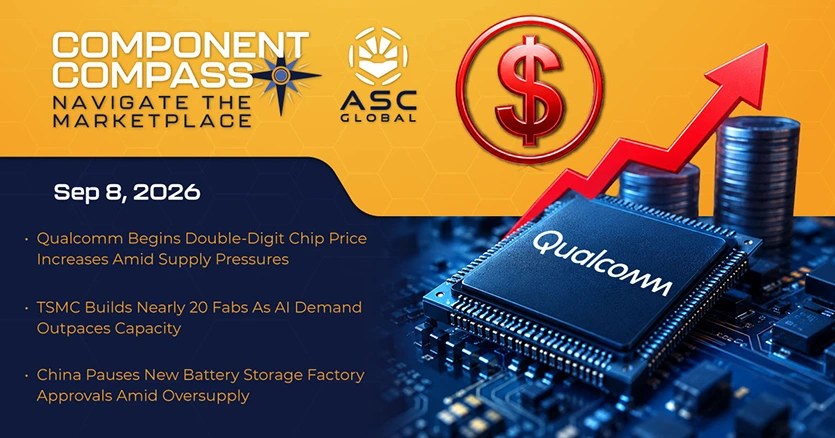
Mini banner promoting ASC Global’s Electronics Market Report Q2 2026, highlighting the global memory crisis impacting availability, pricing, and electronics supply chains.

For more news and industry insights dive into our Market Report

Frequently Asked Questions About
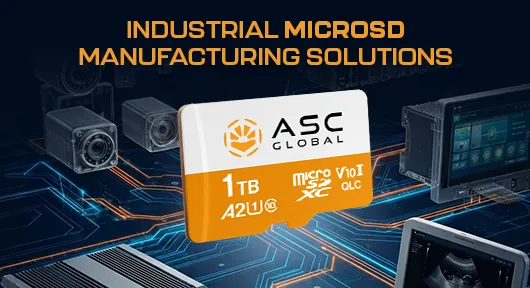
Industrial Microsd

How is ASC's industrial-grade MicroSD different from a standard consumer MicroSD card?

The difference starts at the NAND level. ASC's industrial MicroSD line uses true SLC (Single-Level Cell) architecture on capacities from 4GB to 32GB, which stores one bit per cell and supports millions of write cycles, compared to the multi-bit-per-cell TLC or QLC NAND used in consumer cards, which wear out far sooner under continuous write loads. Higher-capacity cards (64GB to 1TB) use TLC or QLC NAND graded for commercial or industrial duty depending on the application. Beyond the NAND, ASC's industrial cards carry a locked bill of materials, so the controller, firmware, and NAND source stay fixed for the life of the design rather than changing without notice, which is common with consumer-grade cards sold through retail channels. Every industrial card also ships with a 36-month manufacturer warranty and passes 100% pre-shipment quality inspection, neither of which apply to consumer retail products.

Our last microSD supplier changed the NAND or controller without notice and broke our qualification. How does ASC prevent that from happening again?

BOM changes are one of the most common ways embedded and industrial programs lose qualification on a memory component, because a consumer-grade supplier can substitute NAND die, controller firmware, or even the flash vendor between production runs without informing the customer. ASC's industrial MicroSD program locks the BOM at the point of qualification, so the NAND, controller, and firmware combination your engineering team tested and approved is the combination you receive on every reorder for the life of the program. Combined with 100% pre-shipment inspection and a 36-month warranty, this gives procurement and engineering teams a documented, stable part number to build a long-term hardware lifecycle around, rather than requalifying every time a reorder arrives.

We need microSD cards that survive automotive or outdoor temperature swings and years of continuous power cycling. What environmental and endurance specs does ASC's industrial MicroSD line meet?

ASC's industrial MicroSD cards are built for a -40°C to +85°C operating range and a stable 2.7V to 3.6V power profile, which covers the temperature extremes typical of outdoor enclosures, vehicle cabins, and unconditioned industrial spaces. Mechanically, the cards are rated for 10,000 insertion and removal cycles and are tested against ESD, drops, moisture, corrosion, torque, and bending, conditions that a consumer card is never validated against. On the endurance side, the SLC NAND used in the 4GB to 32GB range supports millions of write cycles, which matters for applications like continuous data logging, HMI displays, and always-on surveillance recording where the card is written to constantly rather than occasionally. All cards support the SD 6.1 and UHS-I specifications plus SPI interfaces, with read speeds up to 100MB/s and write speeds up to 80MB/s.

Global memory shortages have made microSD allocation and lead times unpredictable. How does ASC keep supply stable for OEM production schedules?

ASC's industrial MicroSD manufacturing runs independently of the open-market NAND allocation swings that have driven the broader memory shortage, with production capacity of up to 1.5 million units per month and flexible scaling for OEM and high-volume programs. First orders ship in approximately 3 weeks, with faster turnaround on repeat replenishment orders, and customers on ASC's program receive priority allocation during industry-wide shortage periods rather than competing for open-market spot inventory. ASC also supports long-term lifecycle planning mapped to multi-year hardware programs, volume pricing tied to forecast-based manufacturing, and global logistics integration, so a production schedule set 12 to 24 months out can be planned against a defined supply commitment rather than quarter-to-quarter market conditions.

We want a private-label or custom-firmware microSD solution for our product line. What does ASC's manufacturing program support?

ASC's industrial MicroSD manufacturing includes OEM and private-label support, with customizable packaging and firmware tailored to the customer's application, in addition to standard catalog cards. Because production runs through ASC's own manufacturing rather than a repackaged consumer supply chain, customers can work directly with ASC's team on firmware behavior, capacity point, and NAND grade (SLC, TLC, or QLC) before the design is locked, and that configuration becomes the fixed BOM for the life of the program. Free samples are available with full engineering evaluation and compatibility testing before committing to a production order, which lets your team validate the custom configuration against your existing hardware and firmware before volume manufacturing begins.

How does ASC verify quality on every microSD shipment before it reaches our production line?

Every industrial MicroSD order goes through 100% pre-shipment quality inspection before it leaves ASC's manufacturing facility, backed by a 36-month manufacturer warranty on the finished product. This sits alongside ASC's broader quality infrastructure across its component lines, including AS 6081:2012 certification for counterfeit avoidance, ISO 9001:2015 and AS 9120:2016 certifications supporting traceability for regulated industries, and an in-house testing lab capable of XRF analysis and electrical testing to confirm that a card's marked capacity, NAND grade, and temperature rating match what actually ships. For programs that need documentation beyond standard inspection, including automotive, medical, or aerospace end uses, ASC can provide certificates of conformance and traceability records covering the manufacturing lot.

Related News

Loading...